When buyers enter a home for the first time, the kitchen is the focus of a lot of attention. Buyers examine the layout, appliances, cabinets and countertop materials. People have very different preferences, but the design of each of these elements changes over time in a fairly generalized way. It is usually easy to recognize the era in which a kitchen was made or remodeled based on layout and materials.
In the early 20th century, most kitchens had cabinetry that was moveable and more like furniture. Those pieces had a porcelain coated work surface that was small by today’s standards. Things evolved quickly from there. Ceramic tile as countertops and backsplashes was in style by the 19-teens. The tile colors were usually pastels, times they were square, but hexagonal tiles were also popular. Few of the kitchens with this tile still exist today, but when you see one, it is distinctive and usually pretty.
I have lived with and cared for each of the surfaces described in this blog. The one exception is marble.
Marble
Years ago I was given a behind the scenes tour of the Pittock Mansion in Portland Oregon. It is an opulent masterpiece designed by and for a lumber baron. In the mansion, many of the surfaces intended to encounter water are made of marble. The effect is one of timeless beauty evoking Roman baths.
Marble has been used throughout the past century, but products meant to imitate it have been much more popular.
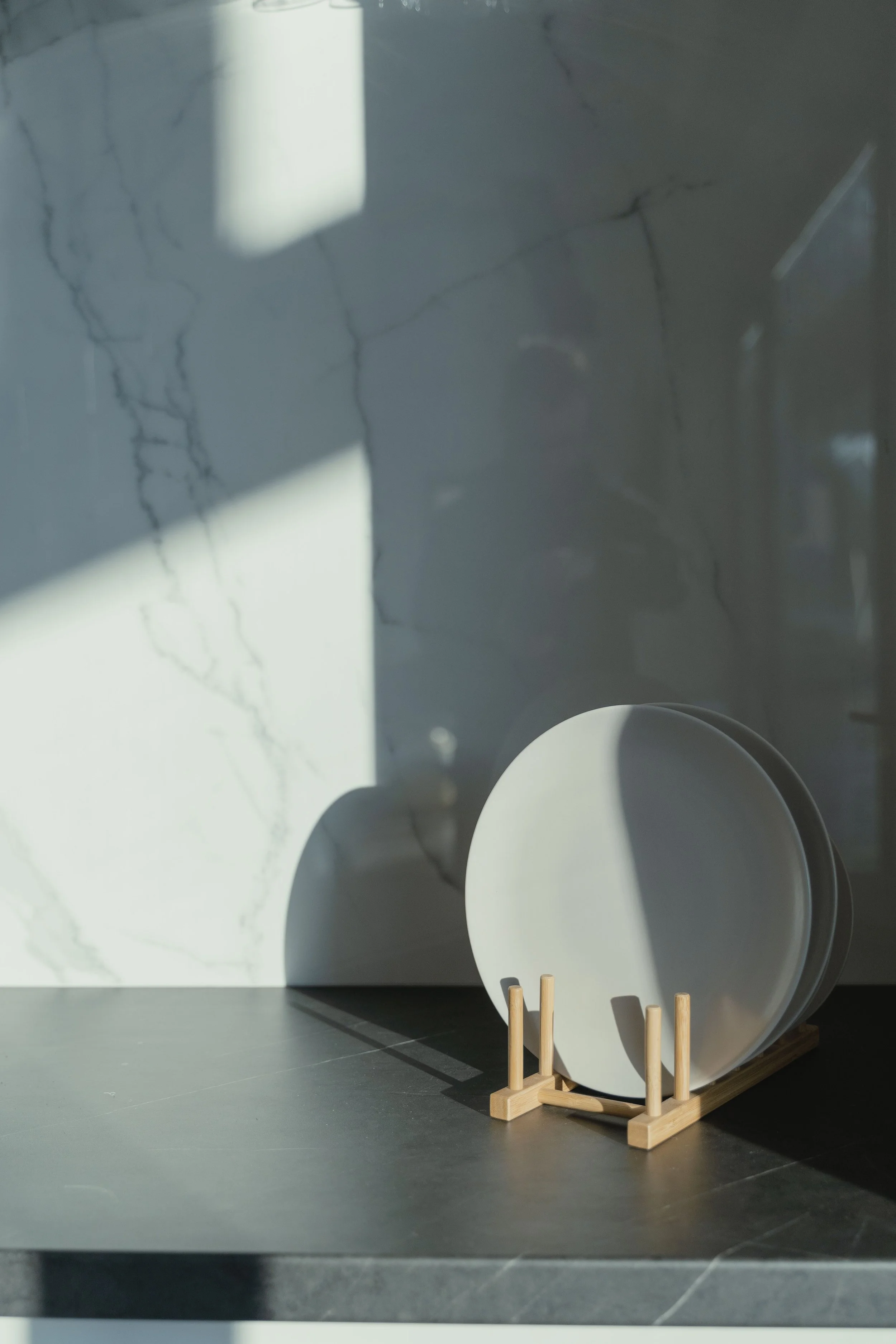
Popular kitchen materials often imitate marble for reasons of both cost and practicality.
Marble is porous, so it can be etched and stained by many common household items. Acids like fruit juices, wine, vinegar, coffee and common cleaning products containing citric acid will etch the surface. Natural marble needs to be UV sealed to make it more durable. The UV sealing is done by professionals, and is not a do-it-yourself project.
Formica
Formica is a brand name that has become used as a generic term like Kleenex. Formica and other brands of laminate materials are a considerably less expensive option for countertop material. They come in hundreds of colors and patterns. It was the material choice of the 1960s through the 1980s. Laminate usually cleans easily with soap and water. Over time, water can penetrate joints and corners and cause damage, so it is important to dry these areas thoroughly. Chlorine bleach will remove color and in some cases alter the shine. Abrasives such as soft scrub or scotch-brite type scrubbing sponges will scar the surface. The surface can be burned, leaving a dark, blistered appearance. In some new housing developments today, laminate counters are standard, keeping costs lower for the buyer.
Corian
Corian was a wildly popular option for countertops in the 1990s and early 2000s. It is made of an acrylic resin and natural material, such as stone dust. The appearance is smooth and it comes in a variety of colors. When it was at its most popular, counters were often edged in a contrasting color. It proved to be more durable than laminates and some very mild abrasives could be used.
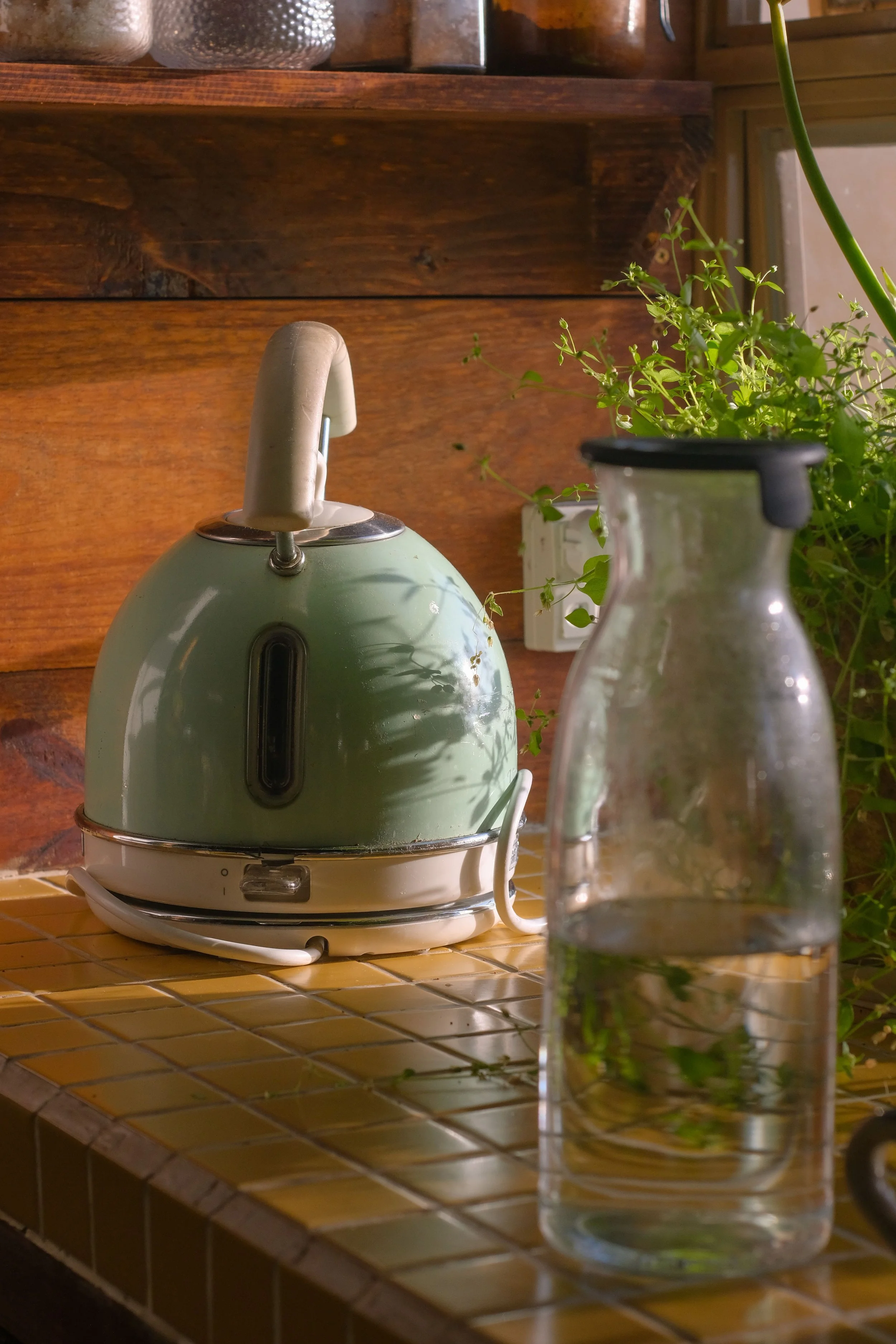
Tile countertops were popular in the early 1910s and 1980s.
Butcher Block
Butcher block counters have not been as trendy as other materials, but have been used in many homes. They lend a warm charm to a kitchen and they are less expensive than many other choices. Many cooks love having the ability to chop food on the counter without getting out a cutting board. The downside with butcher block counters is that they can get burn marks or harbor bacteria. They need to be oiled frequently with food-safe oil, and in a dry climate like Colorado, these counters need more frequent oiling because they may dry out and crack.
Tile
Tile became popular again in the early 1980s and remained popular until Corian succeeded it. The color of choice was cobalt blue, but white or terracotta were also popular. It can be very striking, creating a contrast with sinks, cabinets and the grout used in between. The grout was prone to staining. It makes a better backsplash than countertop.
Granite
Granite comes in many colors and five grades. The grades are based on desirability, porosity and scarcity. Level 5 granite is extremely expensive. If you find granite in an apartment, it is most likely level 1, because there is a good supply available at a reasonable price. I lived with granite for many years. It handles heat well, but it is still important to use hot pads or trivets. A slip of a knife does not gouge it like Corian or Formica. It can be porous, meaning that there are tiny flaws where bacteria can congregate. To help with that, you should clean it well with an antibacterial soap, then rinse it well. Then dry it for a couple of hours and use a quality granite polish, as directed on the bottle. Using granite polish without the pre-cleaning can seal extra bacteria in the polish, and it will smell bad.
What are the countertop decor trends in 2026?
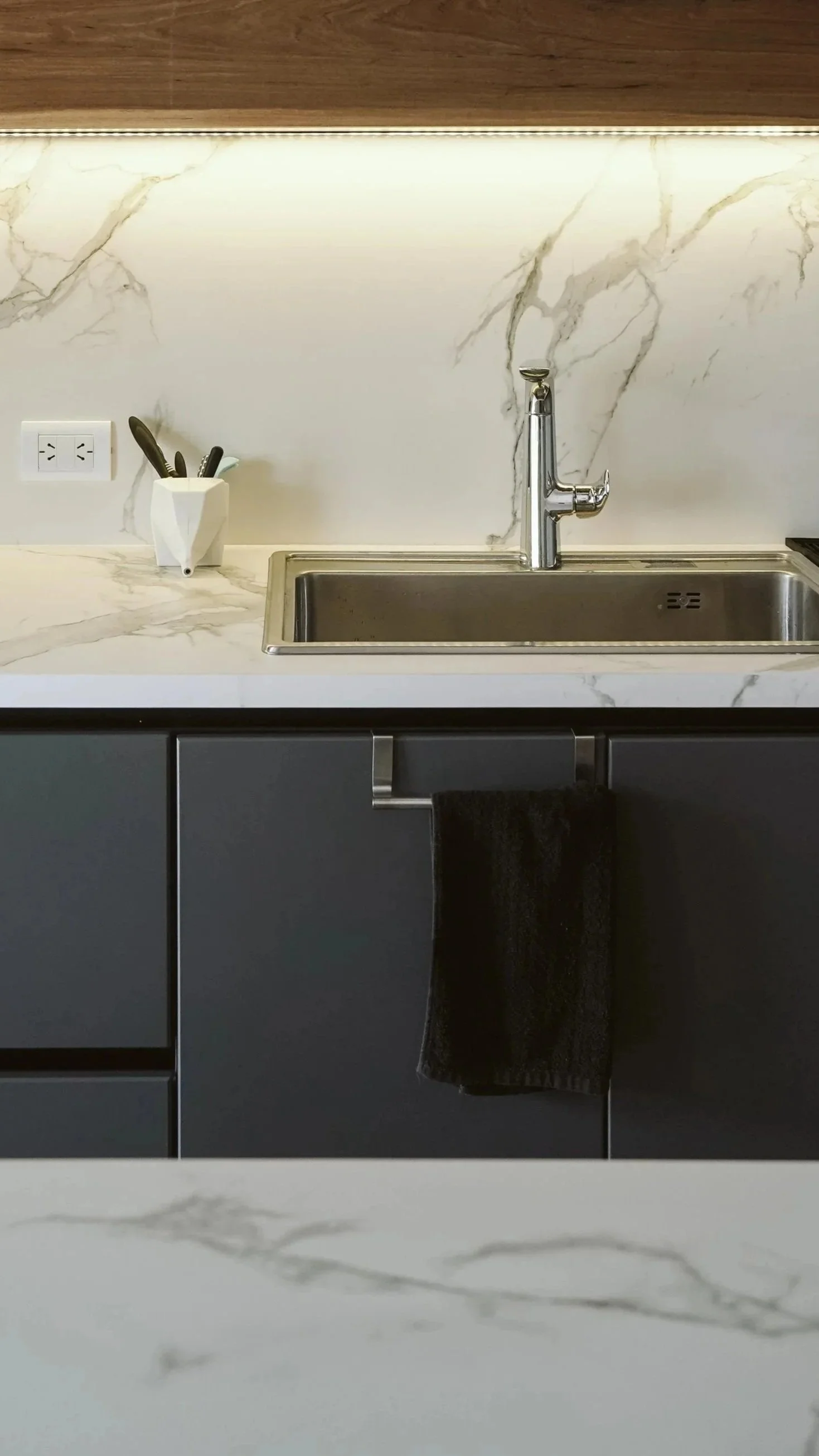
This countertop look can be achieved with Quartz or Porcelain, which are popular material choices in today’s kitchens.
Quartz tends to be the most popular material today for new homes and remodels. It is made of quartz crystals with a lot less resin than Corian. It is harder than most other counter materials. Seams will show more than with Corian, but not as clearly as seams in laminate. Quartz can come in a variety of colors, but most manufacturers make product ranges that are very similar to one another. Quartz can look like one smooth color, have veining like marble or have sparkle. Quartz is also used for backsplash. Using a mitered sheet of quartz at the end of a countertop extending to the floor is called a waterfall edge. Like all trends, it is going to be a signature of an era.
Porcelain sheets are another popular option. They can be made to look a lot like marble, with subtle or bold veining. They are smooth, easy to clean and not porous. They can be made into a waterfall edge. Like granite, marble and Corian, the porcelain sheets are heavy. They are also thin. Edges can chip off and there is no good way to fix the chips.
Porcelain counters were the choice of the early 20th century, and have become a popular choice again.
So, what does this mean for my home?
It is possible to accurately guess a home’s age based on its counter top material. For example, there was a particular dark orange laminate that was extremely popular for a while and was in the kitchen on the show The Brady Bunch. It looked outdated before long, because it was bold and very era-specific. Sometimes design trends and preferences can come full circle. Several years ago, mid-century modern homes were considered outdated, with their galley kitchens, dark cabinets and either laminate or tile counters. Today, many people really want the surviving mid-century modern houses. Because so few were preserved, they can be expensive to buy now. Porcelain counters were the choice of the early 20th century, and have become a popular choice again.
Will having “dated” countertops make it hard to sell my home?
There will always be some small group of buyers who won’t like your kitchen, dated or not. If you have attractive cabinets and the budget to make a change, you may look into replacing your counter tops in order to sell.
If your kitchen has other issues, replacing the countertops is an unnecessary expense. It is usually best to leave the remodeling to the next owner.
How can I avoid having my countertops look too “dated”?
The simplest way to slow the dating of your countertops is by avoiding the trendiest choices. It is also wise to avoid bold colors. Materials that have a more enduring appeal start with marble and its high-quality imitators.
If you plan to stay in a home, choose something you believe you will be happy to use and see for a long time. If you plan to sell soon, make fairly conservative, subtle choices. Creating trends and making existing products seem outmoded is a strategy to create demand for new products, but your choices can transcend that influence. All design choices seem outdated eventually, but if the materials are in good condition, they can be fine to live with, especially if you know how to care for them.